Economy
Ownership, Wages and the Small Business Squeeze
The debate behind the UK's economic pressure.
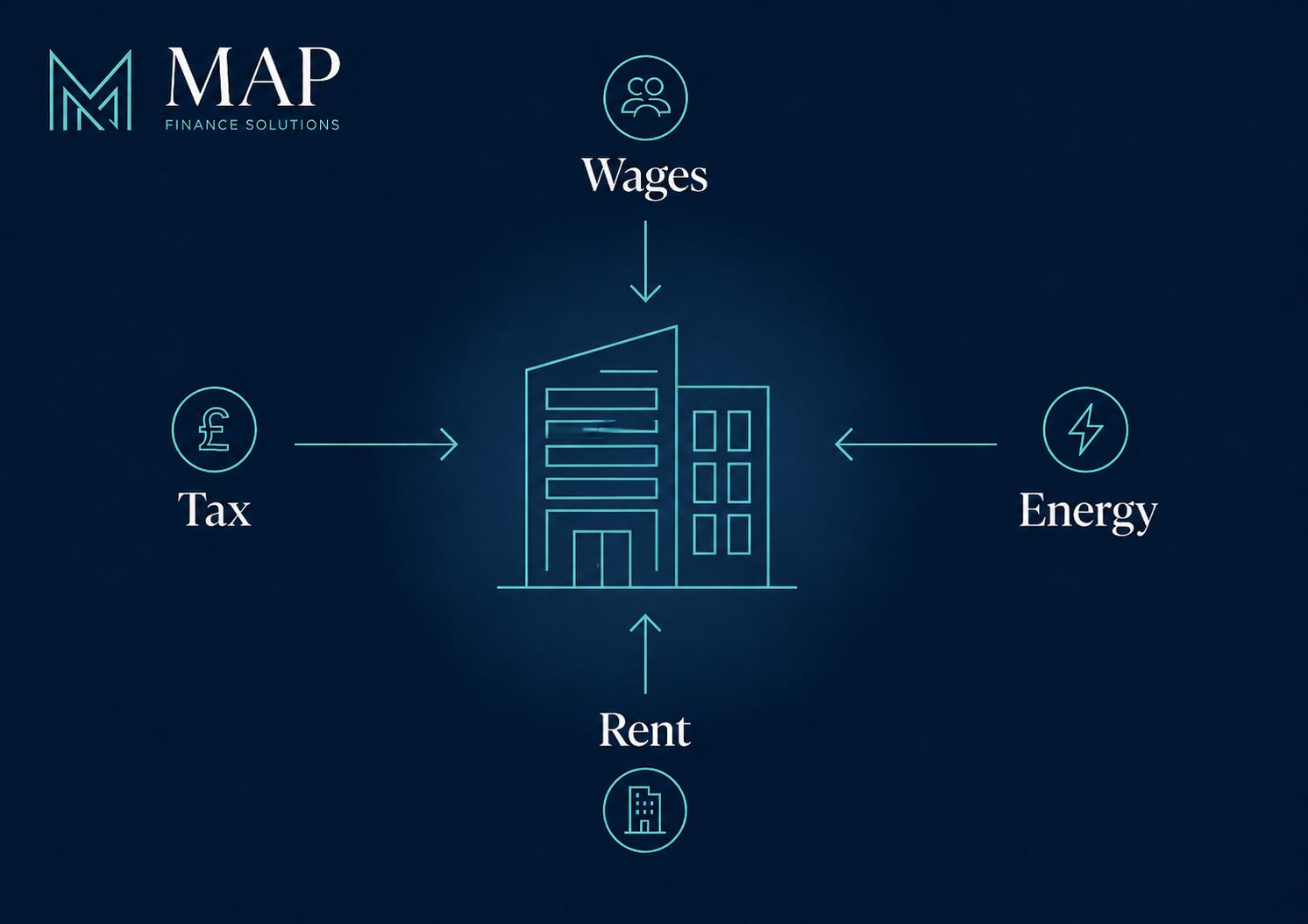
There is a growing debate in the UK economy that is difficult to simplify into one side being right and the other being wrong.
On one side, there is the argument that strong public services, infrastructure, healthcare, education and social support require meaningful government funding. No advanced economy can function properly without roads, hospitals, schools, legal systems, regulation, welfare support and the basic structures that allow society and commerce to operate.
On the other side, many small business owners feel that the current pressure of tax, regulation, wage costs, energy prices, rent, borrowing costs and compliance is making it harder to grow, invest, hire and retain profit.
Both points can be true at the same time.
A society needs functioning public systems. But small businesses also need enough breathing space to create jobs, generate profit, reinvest and build long-term value.
The pressure on small business owners
For many UK business owners, the frustration is not caused by one single tax or one single cost. It is the combined effect.
Wages are increasing. Employer costs are rising. Energy remains volatile. Borrowing is more expensive than it was a few years ago. Rent, insurance, software, professional fees and supplier costs continue to move upward.
At the same time, many businesses cannot simply pass those costs on to customers without risking demand. The result is margin pressure.
Revenue may be growing, but profit may not be. Turnover may look healthy, but cashflow may feel tight. The business may be busy, but the owner may feel no better off.
This is one of the reasons many entrepreneurs feel the system rewards risk less than it should.
The wage question
There is also another side to the debate. Most people are not entrepreneurs, and not everyone wants to run a business. Many people simply want stable work, fair pay, security and a reasonable standard of living.
That matters.
If wages are too low, people cannot save. If they cannot save, they cannot build assets. If they cannot build assets, ownership becomes harder — whether that means owning a home, investing, starting a business, contributing to pensions or building financial independence.
So the issue is not just business profitability. It is also whether work produces enough surplus for people to move beyond survival and towards ownership.
Ownership as the dividing line
A recurring theme in the debate is ownership.
- Owning a home.
- Owning a business.
- Owning shares.
- Owning pension assets.
- Owning intellectual property.
- Owning productive assets.
Ownership is often what separates those who build long-term financial security from those who remain exposed to rising costs. But ownership usually starts with surplus.
A household needs surplus income to save. A business needs surplus profit to reinvest. An employee needs surplus earnings to build assets. A founder needs surplus cashflow to survive long enough to create value.
When the economy becomes too expensive to operate in, the pathway to ownership becomes narrower.
That affects individuals, families and businesses.
The government question
The role of government sits at the centre of this debate.
A smaller state may reduce tax pressure, but it may also reduce public support, public investment and the safety net many people rely on. A larger state may provide better support and infrastructure, but it may also increase the tax and compliance burden on businesses and individuals.
The challenge is balance.
- If taxation is too light, public systems may weaken.
- If taxation is too heavy, enterprise may slow.
- If wages are too low, households struggle.
- If wage costs rise too quickly, employers struggle.
- If businesses cannot retain profit, investment slows.
- If workers cannot build assets, inequality deepens.
There is no simple answer.
Why this matters now
The UK economy is facing a difficult combination of pressures:
- High living costs
- Higher business overheads
- Wage pressure
- Tax pressure
- Expensive borrowing
- Low productivity growth
- Reduced affordability of property
- Lower confidence among some small business owners
These factors all feed into the same question: how do people and businesses build security when the cost of standing still keeps rising?
For employees, the answer is often higher pay, better progression and more opportunity. For business owners, the answer is often margin protection, pricing power, efficiency and the ability to reinvest. For government, the answer is much harder: how to fund the services society needs without reducing the incentive and capacity for businesses to grow.
The real tension
This is not simply a debate about tax. It is a debate about who carries the burden of economic pressure.
- Should businesses absorb higher costs?
- Should consumers pay more?
- Should employees accept lower wage growth?
- Should government reduce spending?
- Should taxes rise or fall?
- Should more people be encouraged into ownership? And if so, how do they get there?
The problem is that each answer creates a consequence somewhere else. Lower taxes may help business owners but reduce public funds. Higher wages may help households but pressure employers. Higher prices may protect margins but reduce affordability. More government support may help society but require more tax. More entrepreneurship may create opportunity, but not everyone can or wants to take that risk.
A balanced view
The UK needs strong public services. It also needs strong small businesses. It needs employees who are paid fairly. It also needs employers who can afford to hire. It needs more people building assets and ownership. It also needs an economy where the first step towards ownership does not feel impossible.
That is the difficult balance.
Small businesses are not simply profit-making entities. They are employers, taxpayers, innovators, local service providers and community anchors. Employees are not simply a cost line. They are the foundation of productivity, service quality and long-term economic stability. Government is not simply a burden. It provides the infrastructure and systems that allow society and business to function.
But when the balance feels wrong, pressure builds.
Final thought
The future of the UK economy may depend less on whether we choose "big government" or "small government", and more on whether we can create a system where work, enterprise and ownership all feel possible.
A healthy economy needs people who can earn well. It needs businesses that can retain enough profit to grow. It needs public systems that function. And it needs more routes for individuals and families to build long-term ownership.
Not whether one side is right and the other is wrong — but how the balance is restored.